

Hang Seng Index
A Deep Value Index or a Prolonged Corrective Phase?


1. Fundamental & Macro Context
Hang Seng Index is the primary benchmark index for Hong Kong equities and a key proxy for Chinese economic performance, particularly through large-cap financials, technology, and real estate companies.
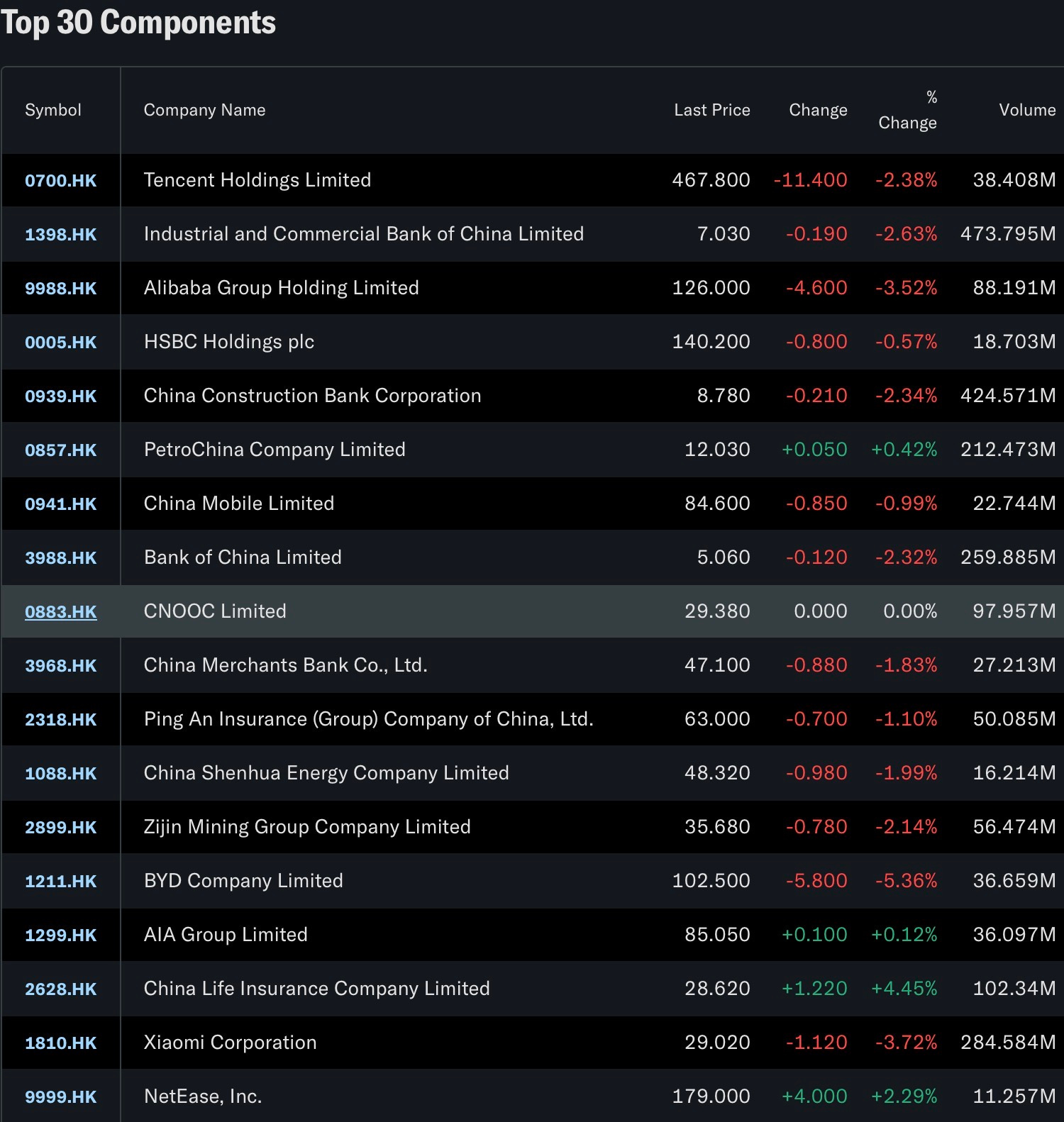
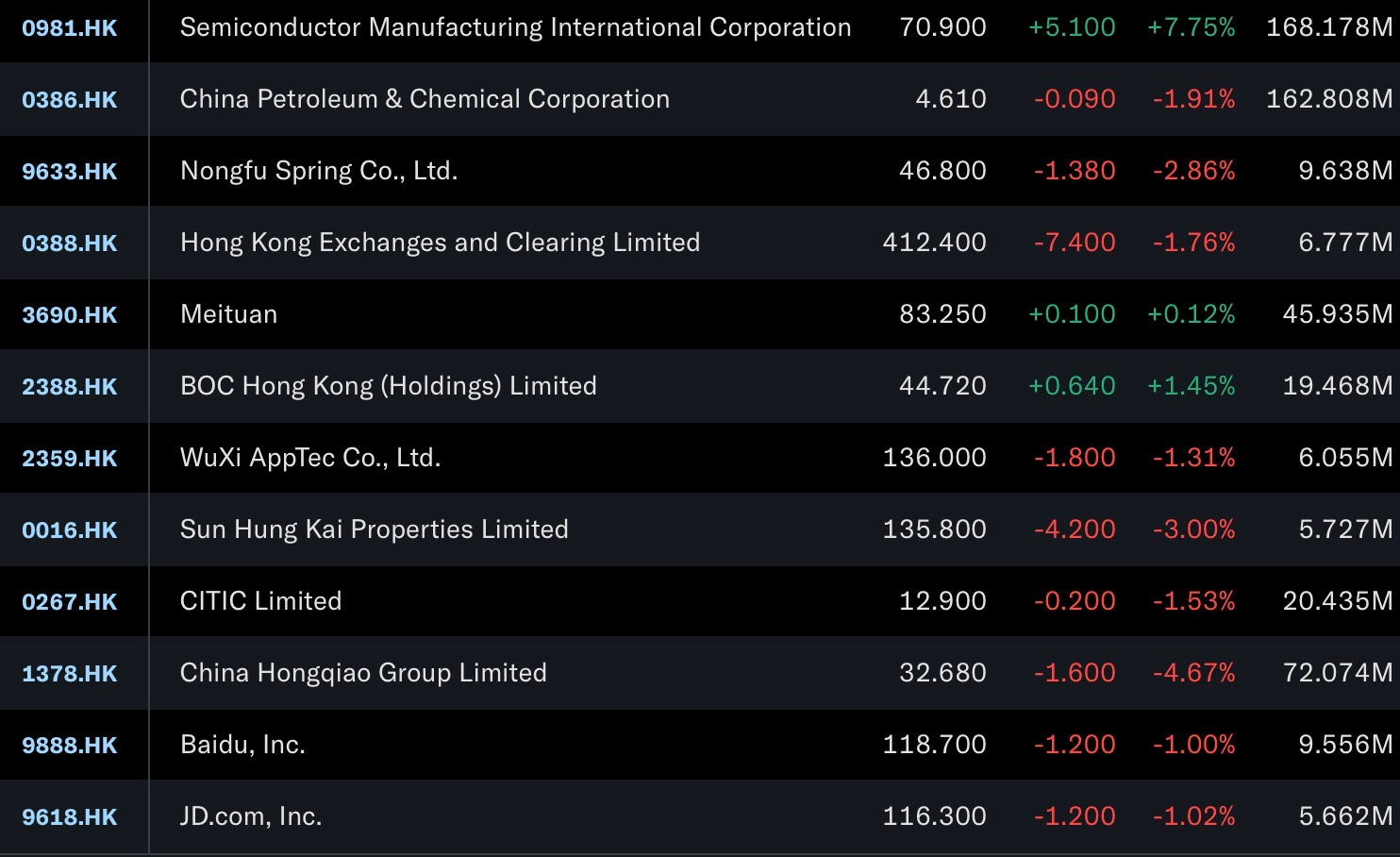
Macro Drivers
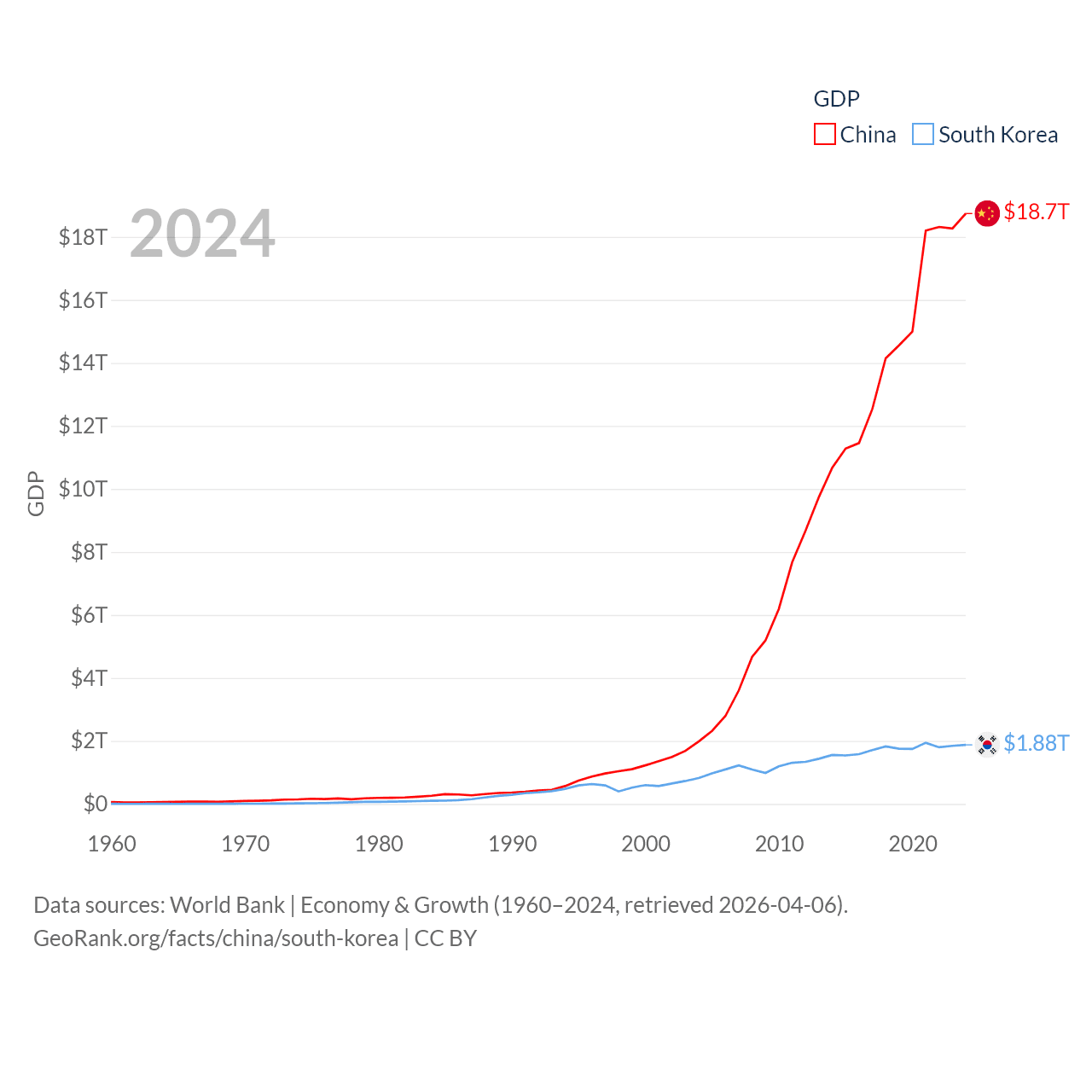
Chinese economic growth and policy stimulus
Capital flows between mainland China and global markets
Regulatory environment for Chinese tech and financial firms
Real estate sector stability in China
USD/HKD peg and global liquidity conditions
Strengths
Exposure to China’s long-term economic growth
High representation of globally relevant companies
Historically cyclical but deeply mean-reverting
Risks
Political and regulatory uncertainty in China
Weak domestic demand cycles
Capital outflows during global risk-off phases
Structural pressure in Chinese real estate markets
From a macro perspective, the Hang Seng Index is currently positioned as a deep value, macro-sensitive index, often lagging during global tightening cycles but outperforming during liquidity expansions.
2. Correlation & Global Positioning
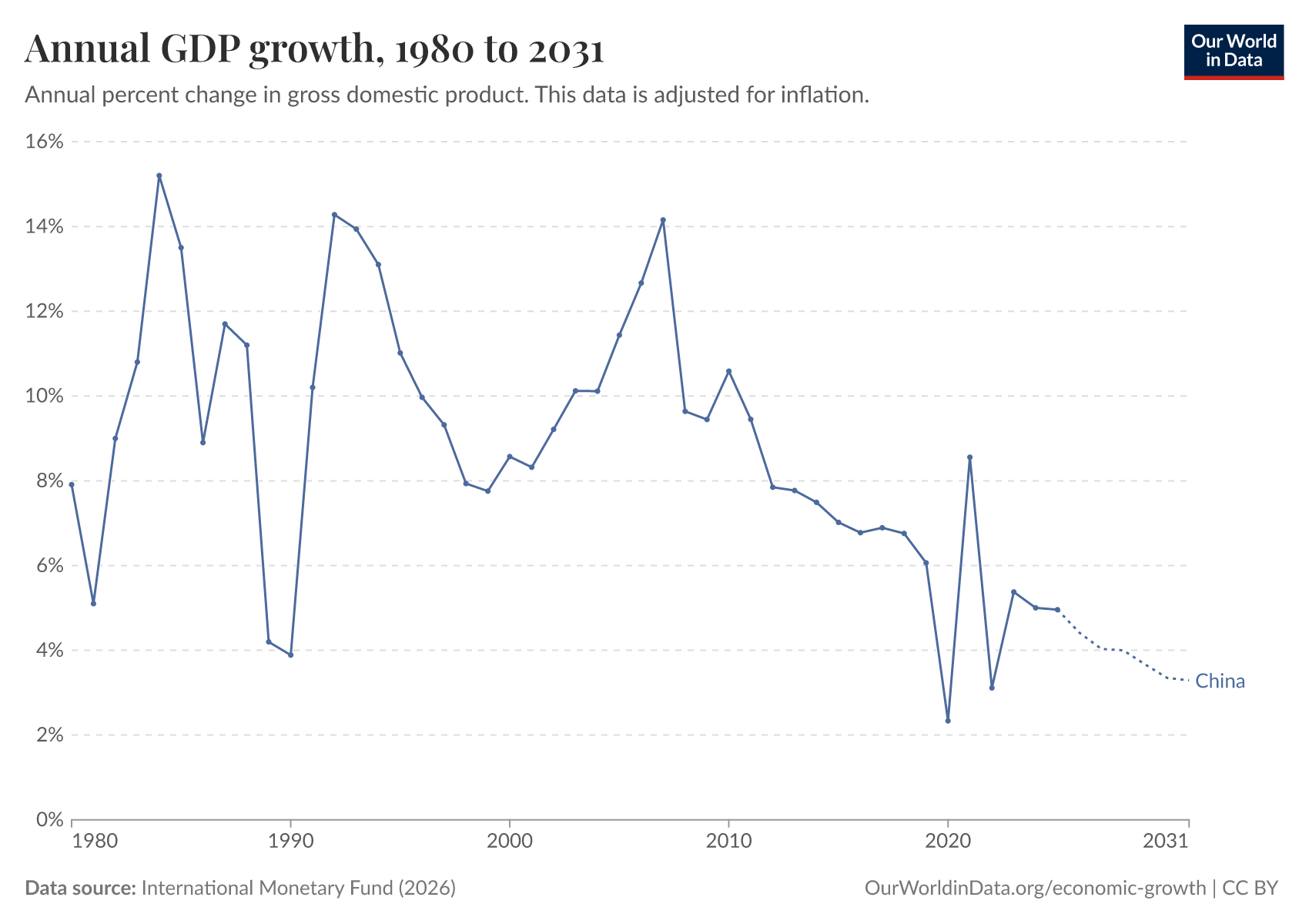
The Hang Seng Index is strongly correlated with:
Chinese equity markets (Shanghai, Shenzhen)
Emerging market capital flows
Global liquidity cycles (Fed & PBoC policy divergence)
Commodity demand cycles (China as global demand driver)
Additionally, geopolitical tensions, trade conflicts, and capital restrictions significantly influence the index’s volatility and valuation multiples.
3. Technical Analysis (Elliott Wave Structure)
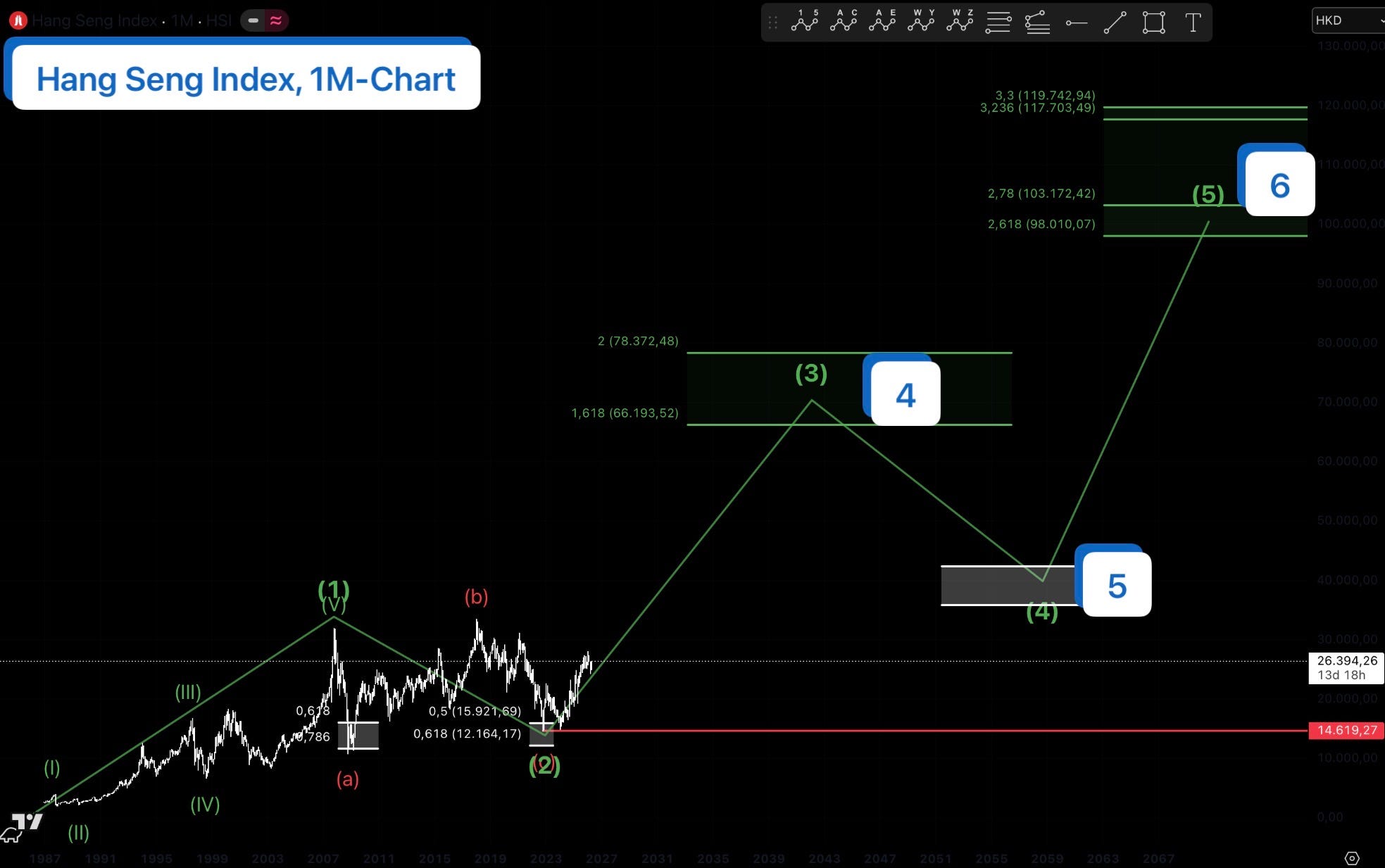
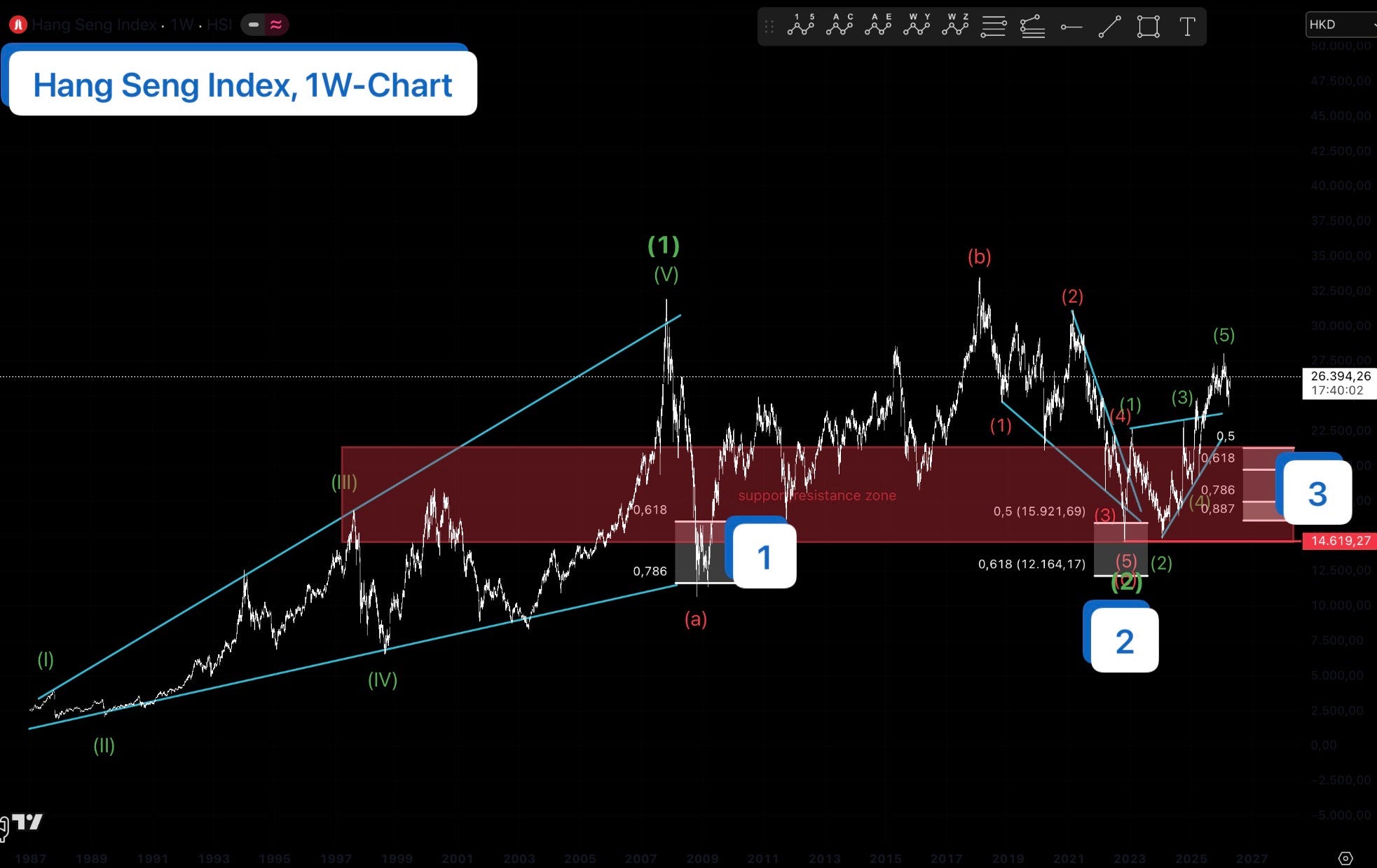
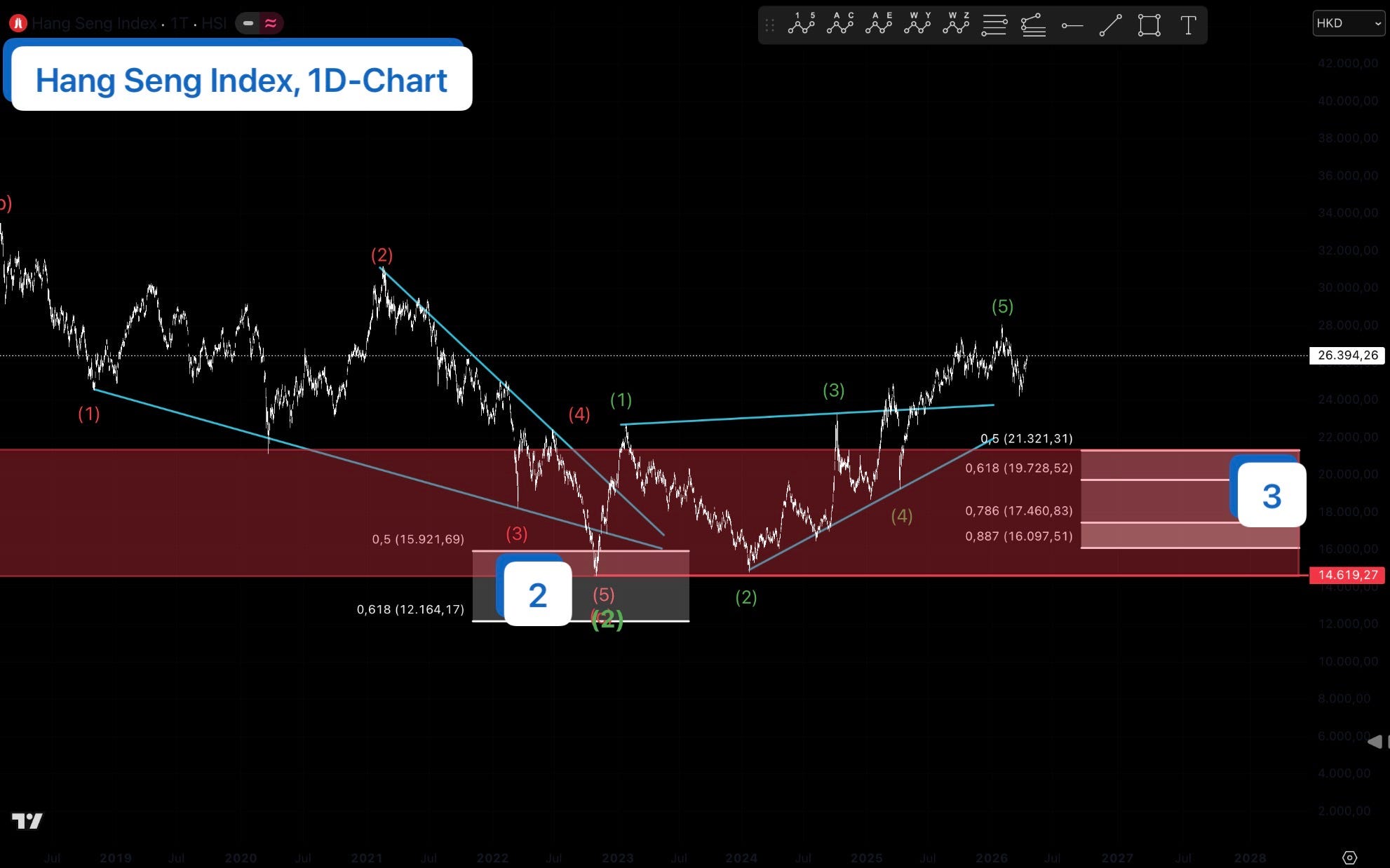
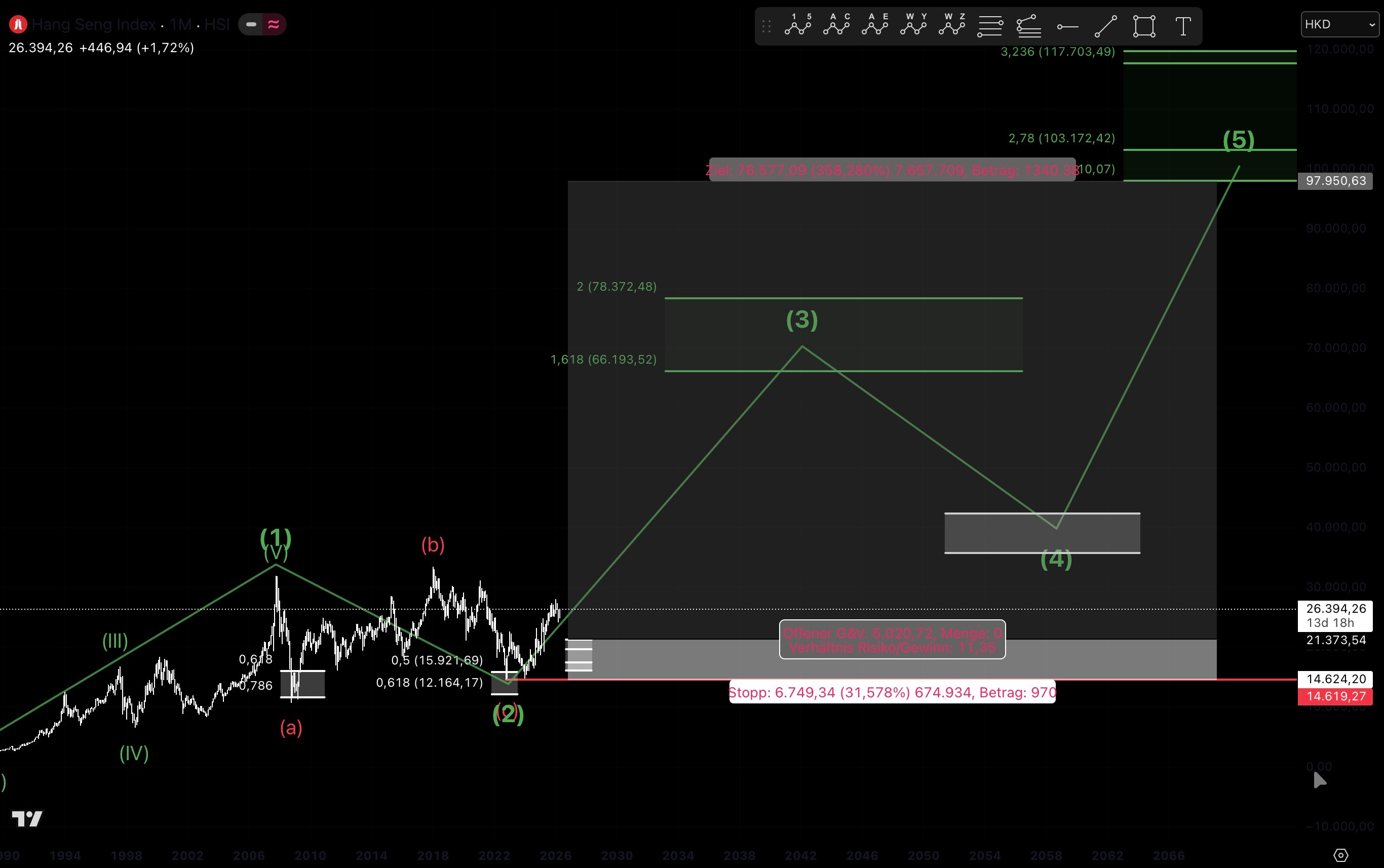
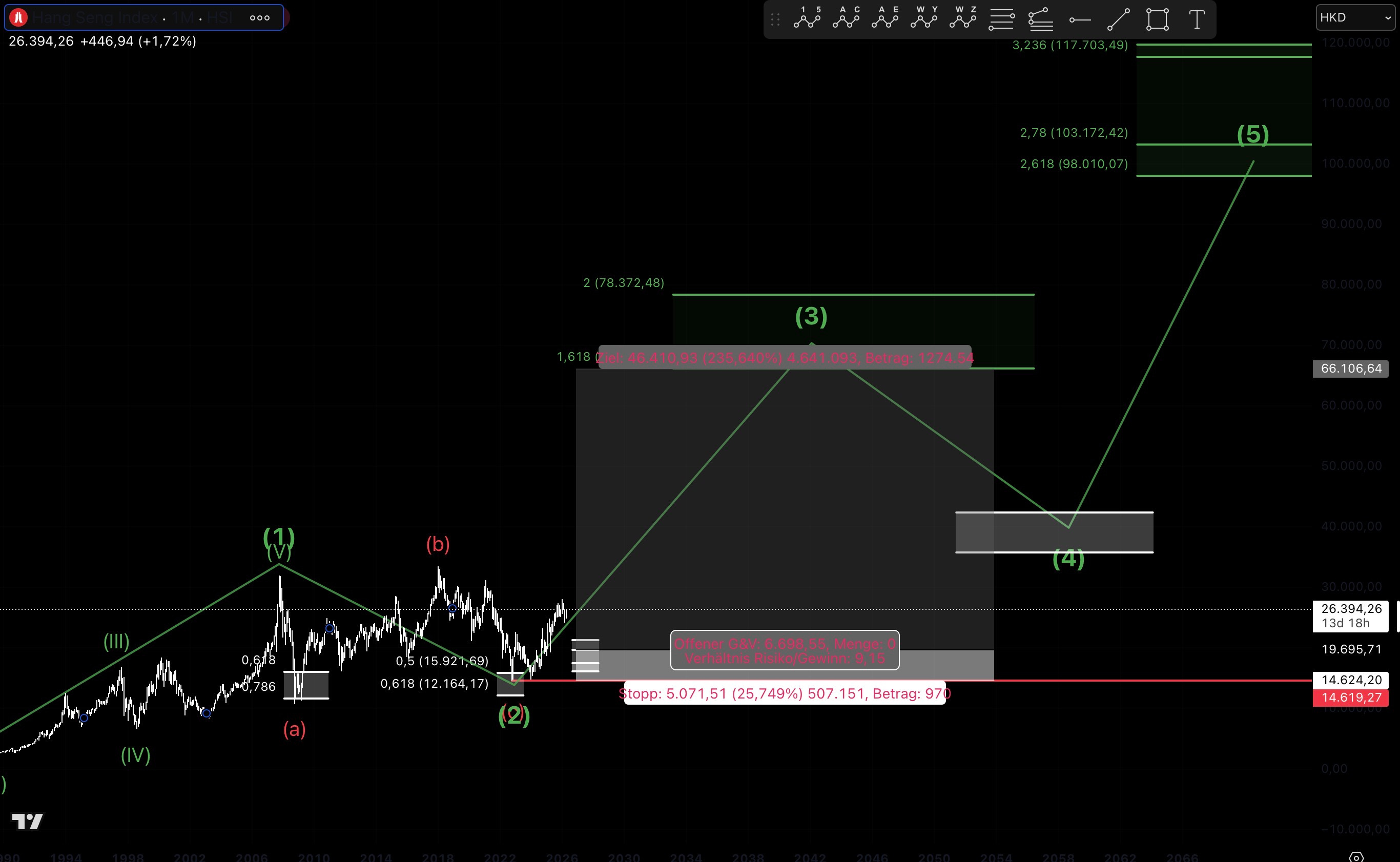
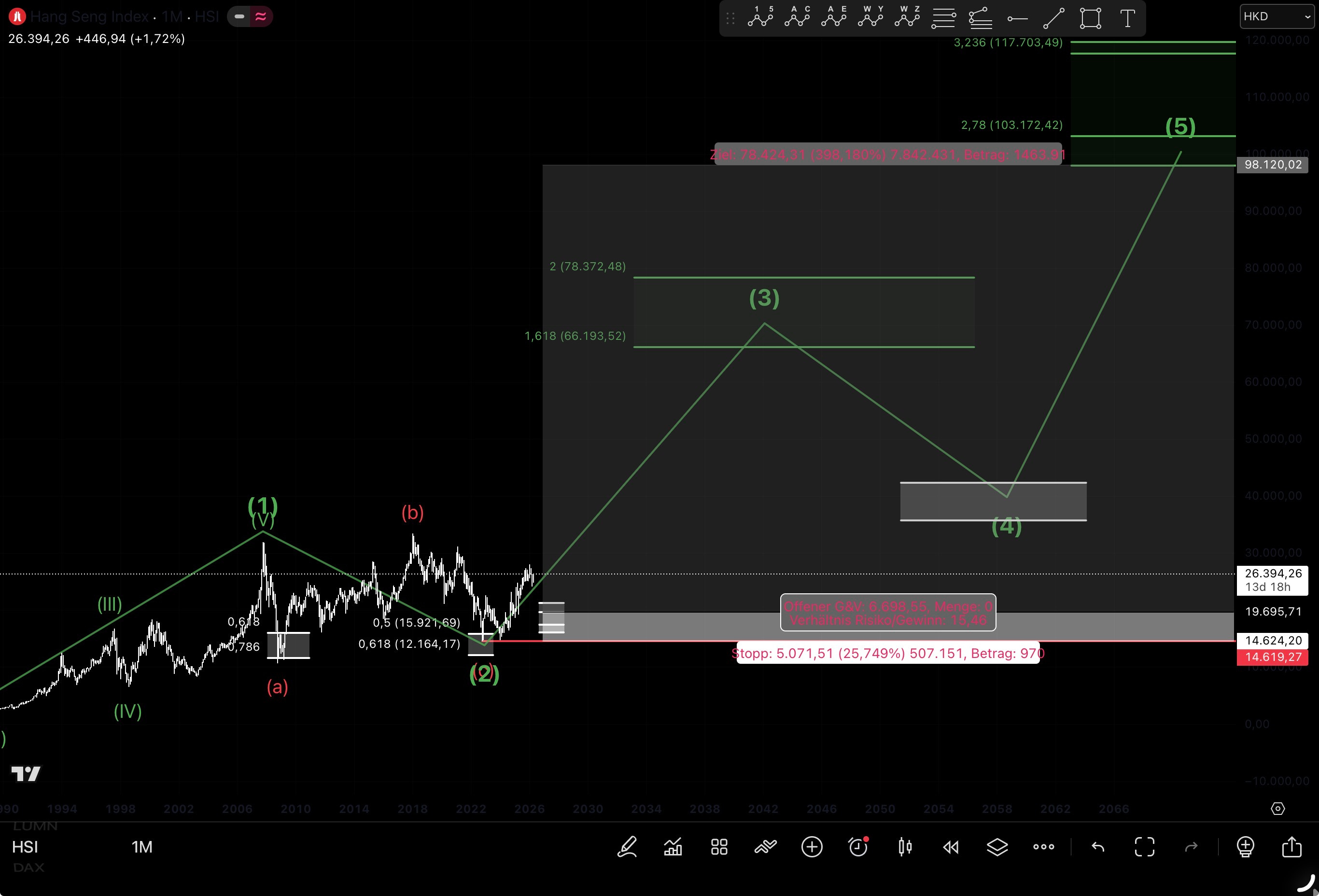
EllTec Analysis assumes that the Hang Seng Index has completed a Supercycle Wave 2 correction, which ended in:
Target Zone 2
Upper boundary: ~15,921 HKD
Based on 0.5 Fibonacci retracement (Supercycle Wave 1 to zero level)
This marks a major structural bottom and transition into a new impulsive cycle.
4. Current Structure – Wave 3 Development
EllTec Analysis interprets the current market phase as the early stage of a Supercycle Wave 3.
Substructure Insight
A diagonal Wave 1 has likely formed
Internal structure: 3-3-3-3-3
This structure often appears at the beginning of large impulsive cycles
Following this, the market is expected to form a Wave 2 retracement before accelerating higher.
5. Key Accumulation Zone (Wave 2 Target)
Target Zone 3 – Preferred Buy Zone
Upper boundary: ~21,321 HKD
Preferred level (0.618 Fibonacci): ~19,728 HKD
This zone is expected to complete the Wave 2 correction and provides a high-probability accumulation area.
Technical Confluence
Historical support/resistance zone dating back to 1997
Multiple prior reactions confirm strong liquidity presence
Adds significant confluence to the Fibonacci retracement levels
6. Long-Term Target Zones
Target Zone 4 – Supercycle Wave 3
Lower boundary: ~66,193 HKD
Based on 1.618 Fibonacci extension
Primary upside target for the impulsive Wave 3 expansion.
Target Zone 6 – Supercycle Wave 5
Lower boundary: ~98,000 HKD
Based on 2.618 Fibonacci extension
This represents a long-term macro cycle top and should be used for final position exits.
7. Potential Trade Planning
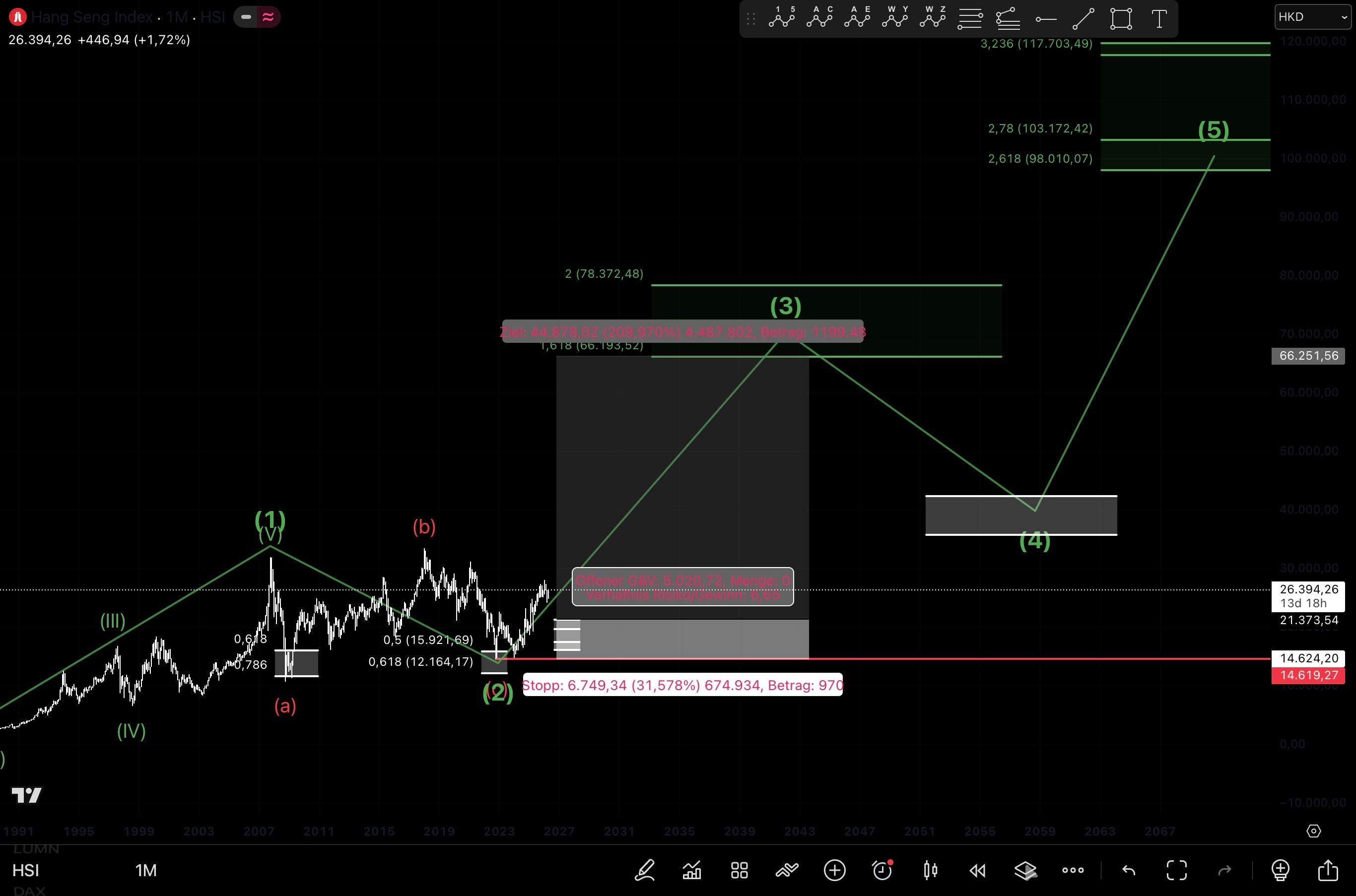
Accumulation Strategy in Target Zone 3
50% entry: at 0.5 retracement (~21,321HKD)
50% entry: at 0.618 retracement (~19,728 HKD)
This staged approach allows participation while optimizing entry efficiency.
Profit-Taking Strategy
50% exit: at Target Zone 4 (~66,193 HKD)
50% exit: at Target Zone 6 (~98,000 HKD)
This aligns with Wave 3 and Wave 5 completion dynamics.
Stop-Loss Strategy
100% exit: price breaking 14,619HKD
8. Structural Insight – Truncation Factor
A key observation in this structure:
Wave 2 did not fully retrace into Wave A lows
This suggests a possible truncation in Wave C, which is common in major indices
Unlike individual stocks, indices often show:
shallower corrections
sustained structural strength
truncations due to diversification effects
This further supports the bullish supercycle interpretation.
9. Risk Assessment
EllTec Analysis assigns the Hang Seng Index a Risk Score of 1/10.
Reasoning
Broad, diversified index structure
Deep historical correction already completed
Strong macro importance of China as a global economic power
Lower idiosyncratic risk compared to individual equities
Despite macro volatility, structurally this represents a low-risk, high-asymmetry macro setup.
10. Alternative Scenarios
Primary Invalidation
14,619 HKD
A break below this level would:
invalidate the completed Wave 2 assumption
suggest a deeper corrective structure
require full wave count reassessment
Secondary Scenario
If price breaks above the current Intermediate Wave 5 high prematurely:
The assumed Wave 1 may not be complete
The structure may still be developing
Fibonacci targets and wave counts would need adjustment
All structural updates will be communicated to premium subscribers as the market evolves.
Conclusion
The Hang Seng Index appears to have completed a major Supercycle Wave 2 correction and is now transitioning into an early-stage Wave 3 expansion phase. With a high-confluence accumulation zone forming around 19,700–21,300 HKD and long-term targets extending toward 66,000 and 98,000 HKD, the current structure presents a compelling macro opportunity.
The combination of Elliott Wave structure, Fibonacci confluence, and historical support zones reinforces the expectation of a sustained long-term bullish cycle.
Disclaimer
This analysis is for informational purposes only and does not constitute financial advice. All information is provided without guarantee. Markets involve risks, and past performance is not indicative of future results. Please do your own research or consult a licensed advisor. EllTec Analysis assumes no liability for decisions based on this content.